Old website
← Back to all market reviews
🇮🇷

Data as of: 1 January 2026

Iran Textile Market

A marketing review of the textile industry, import demand, tariffs, logistics and opportunities for Uzbek exporters.
Population88.0 million
Textile importsUSD 2.2 billion (2024)
Uzbekistan share2.9% — USD 86.0 million
Uzbekistan exportsUSD 46.7 million
Import VAT9%
Distance2,200 km
DeliveryUSD 3,000–3,500 · up to 5 days

Charts and infographics

Market overview

Iran has a long history of textile production and is known for traditional carpets, rugs and handmade fabrics. Its textile sector combines traditional crafts with modern manufacturing capacity.

Key market characteristics

  • Spinning, weaving, knitting and dyeing are established segments.
  • The country produces cotton, silk, wool and synthetic textiles.
  • Traditional handmade carpets are in strong domestic and international demand.
  • Domestic demand is significant for quality fabrics, apparel and traditional garments.
  • Iran has access to cotton, wool and silk raw materials.
  • Modern production facilities operate in major cities, including Tehran.
  • Key constraints include outdated machinery, limited access to modern technology and international trade restrictions.

Main imported products

  • Cotton, synthetic and blended fabrics
  • Cotton and man-made fibre yarn
  • Ready-made garments in limited volumes
  • Home textiles, including bed linen and towels
  • Nonwovens and technical textiles

Main supplier countries

  • United Arab Emirates — the largest supplier, often serving as a re-export hub
  • China — fabrics, yarn and finished goods
  • Türkiye — fabrics, apparel and home textiles

Trade with Uzbekistan

According to the source document, Uzbek textile products accounted for 2.9% or USD 86.0 million of Iran’s textile imports in 2024. The structure was 99.4% yarn and 0.6% apparel and knitwear.

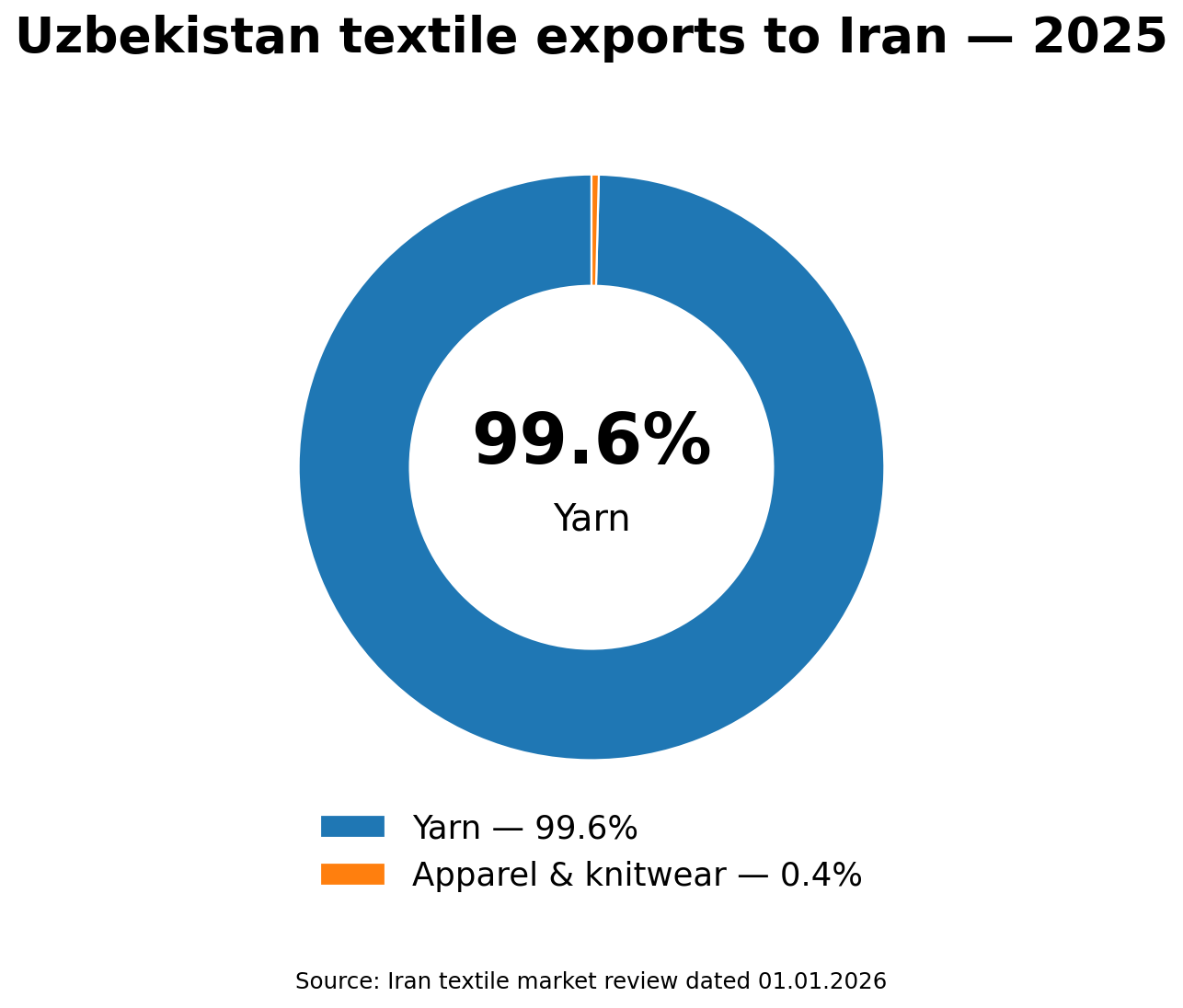
Uzbek textile exports in 2025 amounted to USD 46.7 million: 99.6% yarn and 0.4% apparel and knitwear.

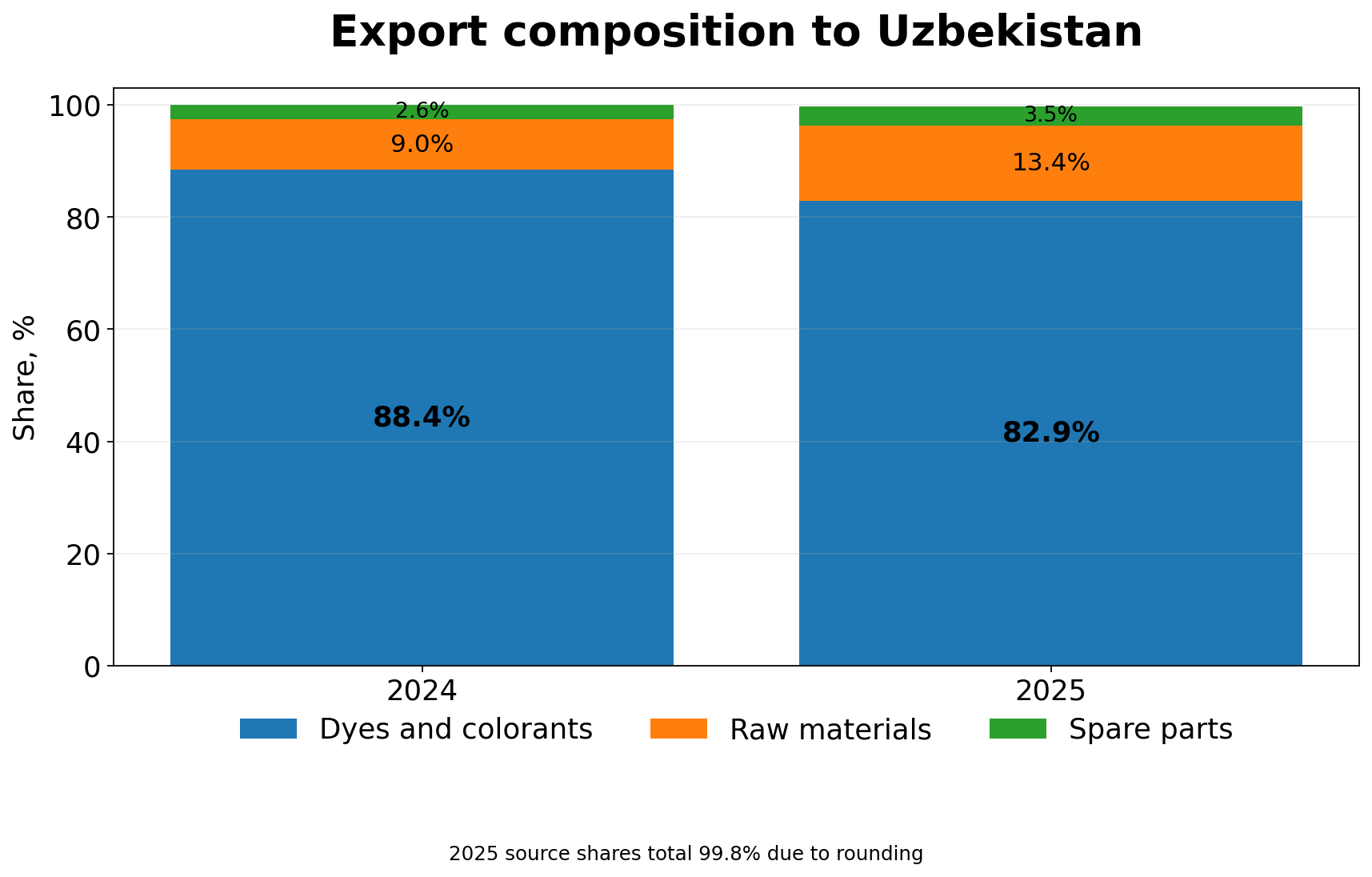
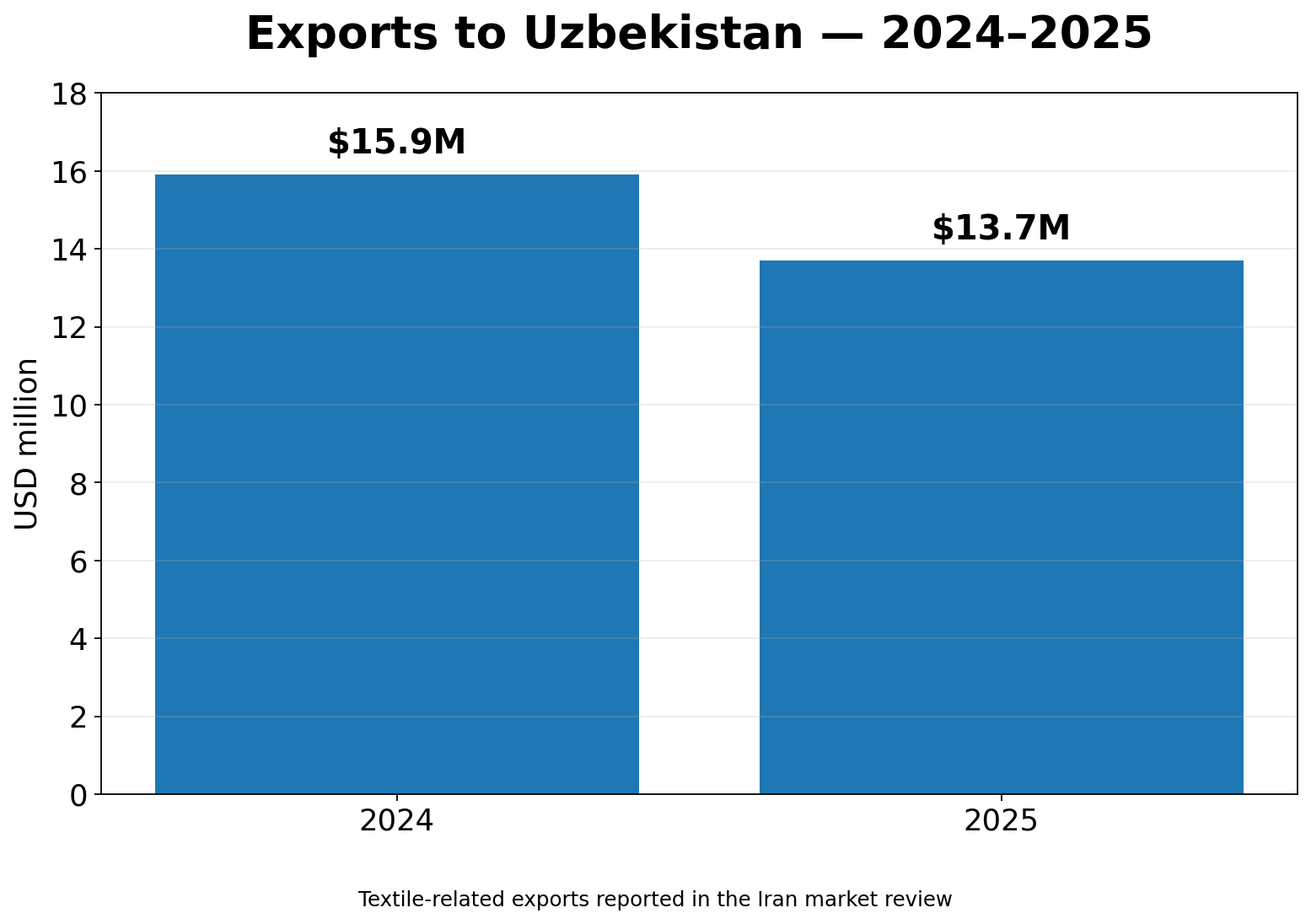
Iranian textile-related exports to Uzbekistan amounted to USD 15.9 million in 2024: 88.4% paints and dyes, 9% synthetic and artificial fibres, and 2.6% spare parts. In 2025, the total was USD 13.7 million: 82.9% paints and dyes, 13.4% raw materials, and 3.5% spare parts.

Notable Iranian apparel brands

  • Homa — women’s apparel combining traditional and modern design
  • Diba — modern women’s fashion collections
  • Samen — clothing for men, women and children
  • Persian Idea — apparel and accessories reflecting Iranian culture and history
  • Aftabgardoon — creative apparel and accessories for men and women

Customs tariffs

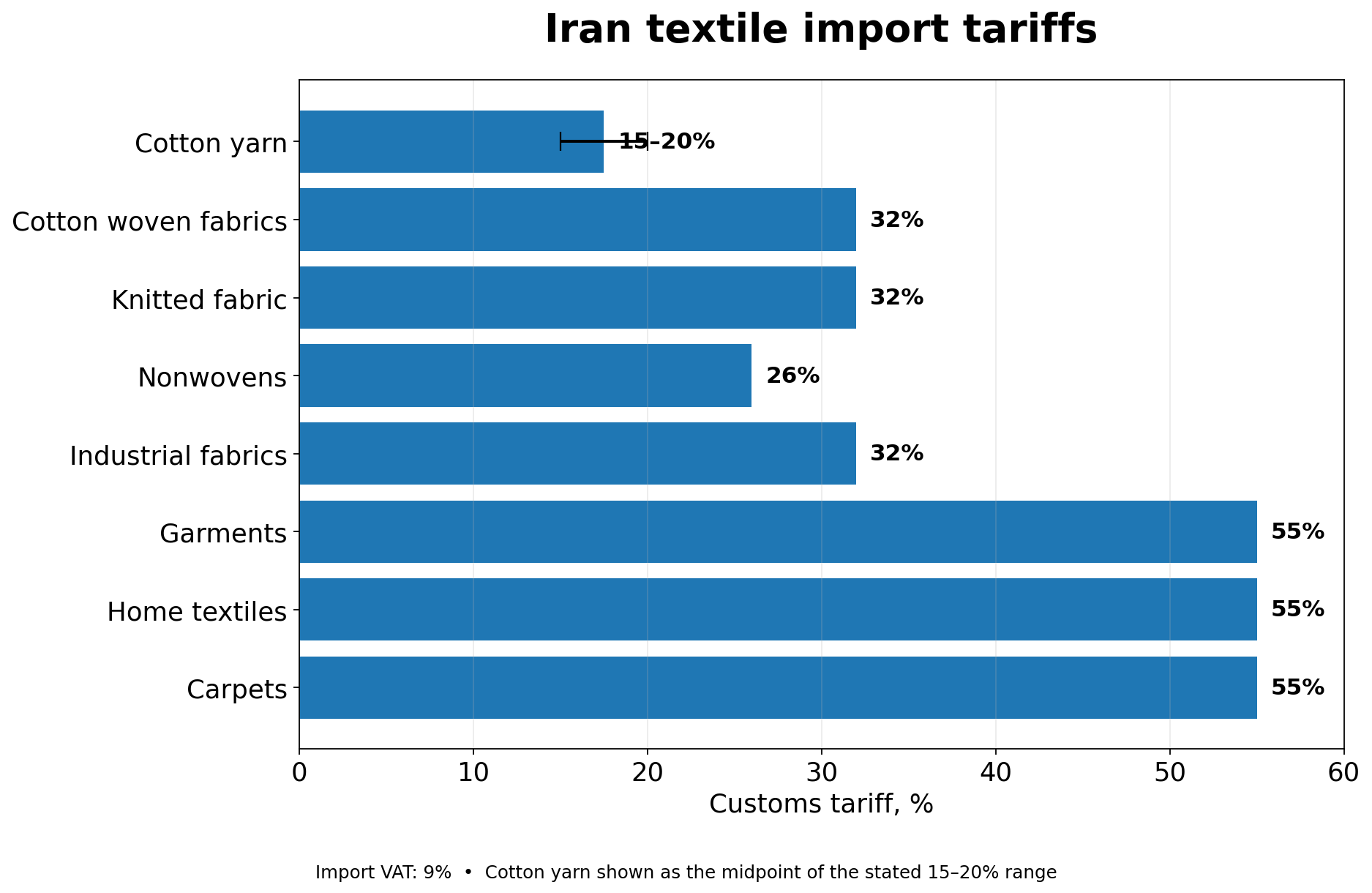
  • Cotton yarn: 15–20%
  • Cotton woven fabrics: 32%
  • Knitted fabric: 32%
  • Nonwoven fabrics: 26%
  • Industrial fabrics: 32%
  • Garments: 55%
  • Home textiles: 55%
  • Carpets: 55%
  • Import VAT: 9%

Logistics

One barrier to export growth toward Southeast Asia and the Persian Gulf is the lack of an optimal transport route, which increases product costs. A prospective corridor is Tashkent – Termez – Mazar-i-Sharif – Sheberghan – Herat – Delaram – Milak – Iran’s Chabahar seaport. The distance between Tashkent and Tehran is approximately 2,200 km, with transit through Turkmenistan. The estimated cost of shipping a 20/40-foot road container is USD 3,000–3,500, with delivery taking up to five days.

Recommended exhibitions

  • IranTex
  • Iran Homtex
  • Iran Intertextile
  • Iran Int’l Carpet Exhibition
  • Heimtextil Iran
  • Irantext
создание сайтов и контекстная реклама webbro.uz